Description
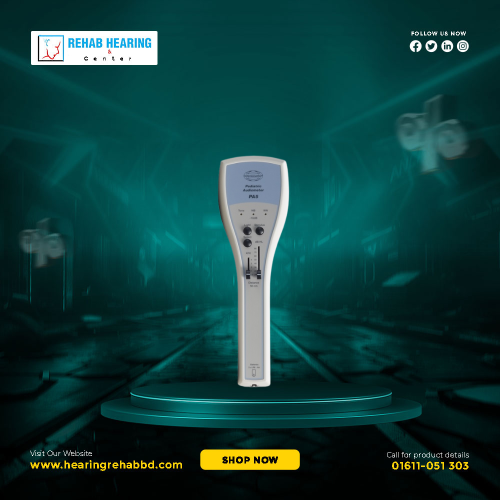
Air & Bone Audiometry (SIH03)
Advanced Diagnostic Hearing Assessment System
The Air & Bone Audiometry (SIH03) is a high-precision diagnostic audiometer designed to evaluate hearing sensitivity through both air conduction and bone conduction testing. Developed for audiologists, ENT specialists, hearing care professionals, hospitals, and diagnostic centers, this advanced system provides accurate and reliable hearing assessments for comprehensive patient care.
Utilizing advanced pure-tone audiometry technology, the SIH03 accurately measures hearing thresholds across a wide range of frequencies. By comparing air and bone conduction responses, clinicians can effectively identify and differentiate between conductive hearing loss, sensorineural hearing loss, and mixed hearing loss, enabling accurate diagnosis and treatment planning.
The system generates clear and detailed audiograms, supporting evidence-based clinical decisions and enhancing the overall hearing evaluation process.
Key Features
- Precise air and bone conduction hearing assessment
- Advanced pure-tone audiometry testing
- Accurate diagnosis of conductive, sensorineural, and mixed hearing loss
- Clear and easy-to-interpret audiogram reports
- User-friendly interface for efficient clinical workflow
- High-accuracy testing across multiple frequencies
- Comfortable and patient-friendly testing procedure
- Suitable for hospitals, ENT clinics, audiology centers, and hearing care facilities
Applications
The SIH03 Air & Bone Audiometry system is ideal for:
- Comprehensive hearing screening and diagnostic evaluations
- Audiology and ENT clinics
- Hearing aid assessment and fitting procedures
- Occupational and industrial hearing conservation programs
- Hospitals, medical centers, and healthcare institutions
- Routine hearing monitoring and rehabilitation planning
Benefits
The SIH03 enables healthcare professionals to perform thorough and efficient hearing evaluations with confidence. By accurately comparing air and bone conduction thresholds, clinicians can determine the type, degree, and severity of hearing impairment, leading to more effective treatment recommendations, hearing aid fitting, and long-term hearing rehabilitation outcomes.